
The Chic Edit
Where women's stories spark meaningful conversations
How a Jubilee debate sparked a deeper question about abortion, motherhood, and what it really means to value life.
A recent Jubilee debate featuring Dean Withers reignited one of the most polarizing conversations in America: abortion. As clips from the discussion spread across social media, so did the familiar arguments. One side spoke about protecting unborn life. The other spoke about bodily autonomy and reproductive rights. Like so many debates before it, the conversation quickly became emotional, ideological, and deeply divided.
Watching it, however, raised a different question that extended beyond abortion itself. If society truly believes every child deserves protection, why does that urgency often seem to diminish after birth?

Img: Jubilee Logo
That question is not intended to dismiss the moral convictions of people who oppose abortion. Many who identify as pro-life sincerely believe they are protecting human life, and that belief deserves to be understood respectfully. Likewise, many who identify as pro-choice are motivated not by indifference toward life but by concern for women’s health, autonomy, and the complex realities surrounding pregnancy. Both perspectives are rooted in values that many people hold deeply.
Yet somewhere between those competing viewpoints, the broader conversation often disappears. The debate becomes focused on one moment in time while overlooking everything that comes before and everything that follows.
Perhaps that is why abortion remains one of the most difficult ethical issues of our time. It is not simply a legal question. It is a medical question. A historical question, a social question and ultimately, a human one.
Abortion Is Not a Modern Debate
One of the most surprising discoveries while researching this topic is that abortion is not a recent phenomenon created by modern politics. It has existed throughout recorded history.
Historical evidence suggests that ancient civilizations, including Egypt, Greece, Rome, China, and Mesopotamia, documented methods used to end pregnancies long before modern governments or political parties existed. The moral and legal treatment of abortion varied across cultures and time periods, but its existence is far older than today’s political divisions.
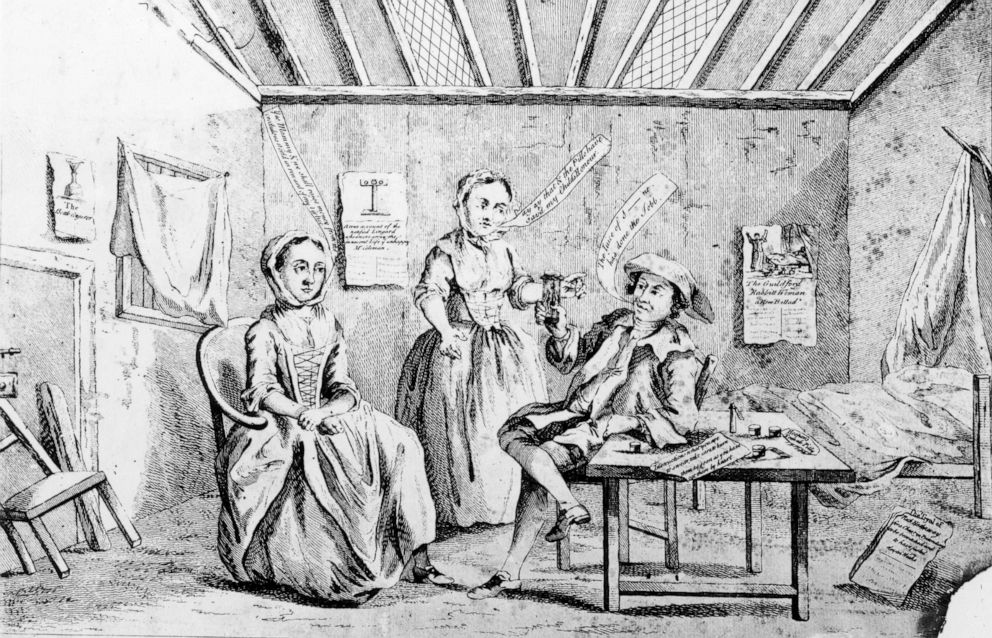
A 1754 engraving shows a doctor speaking with patients about abortion. Rischgitz/Getty Images. (ABC NEWS)
In early American history, abortion laws were also different from what many people assume. Under English common law, which influenced early American law, abortions performed before “quickening” (the stage at which fetal movement could first be felt typically during the second trimester) were generally treated differently from later abortions. It was not until the nineteenth century that states began adopting broader criminal restrictions, influenced by changing medical practices, religious beliefs, and social attitudes.
History also reveals a more painful reality. During slavery in the United States, enslaved women had virtually no control over their own bodies. They endured sexual violence, forced pregnancies, and exploitation. Historians have documented that some sought to prevent or end pregnancies because bringing a child into slavery often meant condemning another generation to the same brutality they experienced. Their stories remind us that reproductive autonomy has long been connected to questions of freedom, power, and human dignity.
What Medicine Actually Says
Much of today’s abortion debate is driven by politics, yet abortion is also a medical issue, and medicine rarely operates in black and white. They embrace nuance, consider gray areas, and evaluate things based on context, probability, and spectrums
Pregnancy develops in stages. Early in pregnancy, an embryo gradually develops into a fetus. Medical professionals also distinguish between early pregnancy and fetal viability which is the stage at which a fetus may be able to survive outside the uterus with intensive medical care. While advances in neonatal medicine have improved outcomes, viability varies depending on individual circumstances and is not defined by a single universal week of pregnancy.

Medical emergencies further illustrate why pregnancy cannot always be understood through political slogans. For example, an ectopic pregnancy occurs when a fertilized egg implants outside the uterus, most commonly in a fallopian tube. Such pregnancies are not viable and, if untreated, can become life-threatening. In these situations, ending the pregnancy is considered necessary medical care to protect the mother’s life.
There are also pregnancies involving severe fetal anomalies that are incompatible with life after birth, as well as miscarriages that sometimes require the same medical procedures used in abortion care. These circumstances are devastating for families and demonstrate that pregnancy is not always a straightforward journey toward childbirth.
Understanding these medical realities does not dictate what someone should believe about abortion. It does, however, illustrate why physicians often emphasize that pregnancy cannot always be addressed through a one-size-fits-all legislation.
The Conversation That Often Gets Left Behind
The most overlooked part of the abortion debate begins after a child is born. Political campaigns frequently promise to protect children before birth. Yet there are millions of families that continue struggling with challenges that receive far less attention after the child is born with little to no help.
Childcare costs remain prohibitively expensive for many households. Families are wrestling with rising housing costs, healthcare expenses, and food insecurity. Foster care systems and orphanages face ongoing challenges such as underfunding, overworked caseworkers, and thousands of children waiting for permanent homes before they “age out” into poverty/homelessness. Schools and communities have been working together to address childhood hunger, while many parents balance multiple jobs simply to meet basic needs. None of these realities diminish the ethical questions surrounding abortion, but raise another question. If protecting children is a shared value, how should society demonstrate that commitment throughout childhood and not only during pregnancy?
Supporting children extends beyond birth. It includes access to healthcare, education, nutrition, stable housing, safe communities, and opportunities to thrive. It also includes supporting the people raising them.

The discussion surrounding abortion often focuses on whether a pregnancy should continue. Less frequently discussed is what happens when that pregnancy results in a child whose family struggles to afford childcare, healthcare, or even groceries. Those realities deserve the same level of attention as well.
Preventing Crisis Before It Begins
Another aspect of the conversation often receives less attention than it deserves: prevention.
Research consistently shows that comprehensive sex education, access to contraception, and reproductive healthcare can reduce unintended pregnancies. Conversations about consent, healthy relationships, and sexual violence also play an important role in prevention.
For survivors of rape or sexual assault, pregnancy can involve profound physical and psychological trauma. These situations add another layer of complexity to an already difficult debate and remind us that no two pregnancies begin under identical circumstances.
During the recent Jubilee debate featuring Dean Withers, one hypothetical question stood out. The audience was asked to consider whether a nine-year-old child who became pregnant after being raped should be required to carry that pregnancy to term. Regardless of where someone stands on abortion, the question forces us to confront a reality that slogans alone cannot answer. A child who has already endured profound violence is suddenly expected to navigate an unimaginably complex medical, emotional, and ethical situation.

The purpose of asking such a question is not to suggest that every pregnancy results from sexual violence or that every abortion is sought for the same reason. Rather, it illustrates why absolute positions are often challenged by extraordinary circumstances. Cases involving rape, incest, or serious threats to a pregnant person’s health remind us that pregnancy exists within the context of real human lives.
Reducing unintended pregnancies is a goal that many people across the political spectrum support, even if they disagree about abortion itself. Focusing on prevention through education, access to healthcare, support for survivors, and efforts to reduce sexual violence offers an opportunity to address some of the underlying conditions that contribute to difficult reproductive decisions.
Beyond Politics
One reason abortion remains such a divisive issue is that it asks society to weigh multiple values that many people consider deeply important. For some, the central question is the moral status of developing human life. For others, the central question is bodily autonomy and the principle that medical decisions should remain between patients and their healthcare providers. Still others focus on public health, social inequality, economic hardship, or the realities facing survivors of violence.
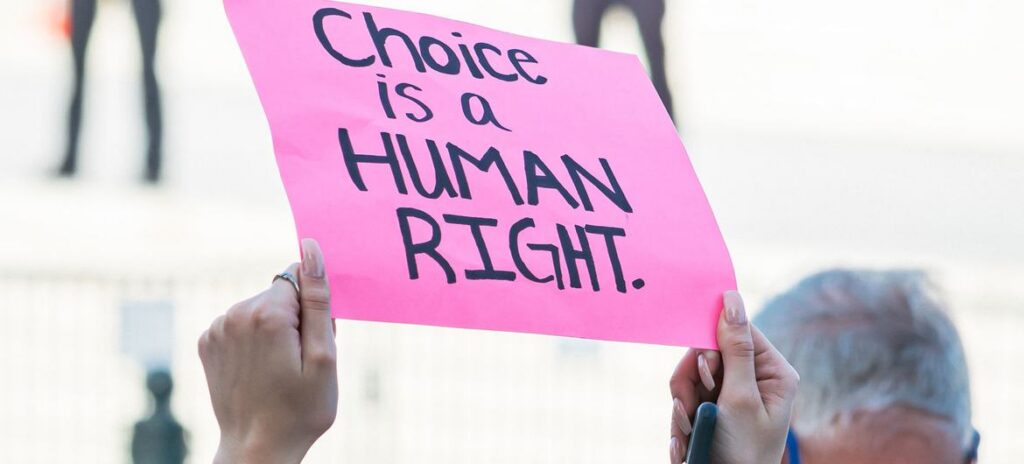
These perspectives are not always mutually exclusive. Many people who identify as pro-life also support expanded childcare, paid parental leave, and adoption reform. Many people who identify as pro-choice also hope for a society in which fewer women ever feel compelled to consider abortion because they have the support and resources needed to raise a child.
Perhaps the most productive conversations begin not by assuming the worst about one another but by recognizing that people often arrive at different conclusions while sharing similar hopes: healthier families, safer communities, and fewer situations marked by crisis and suffering.
The Question Worth Asking
The recent Jubilee debate served as a reminder of how quickly conversations about abortion can become contests over who is right and who is wrong. Yet the discussion may become more meaningful when a different question is asked. What does it truly mean to value life?
If valuing life means protecting children, then perhaps that responsibility extends beyond pregnancy. It includes ensuring children have enough to eat, access to quality education, affordable healthcare, safe homes, and families that receive meaningful support. It includes investing in foster care, maternal healthcare, childcare, and programs that help families succeed and thrive rather than merely survive.
Abortion will likely remain one of the most difficult moral and political questions society faces. There may never be complete agreement, and perhaps that should remind us to approach the subject with humility rather than certainty. Because behind every statistic is a family, every law is a physician, and every debate is a woman facing the most difficult decision. Every pregnancy is a story that no slogan can fully capture.
And perhaps the most important question is not simply whether society cares about children before they are born, but whether it is willing to care for them with the same urgency after they arrive.
– Minahil E.
References
- World Health Organization (WHO). Abortion: Key Facts.
- American College of Obstetricians and Gynecologists (ACOG). Understanding Ectopic Pregnancy.
- Johns Hopkins Bloomberg School of Public Health. A Brief History of Abortion in the United States.
- Guttmacher Institute. Research on unintended pregnancy and reproductive health.
- U.S. Department of Health and Human Services. Foster care and child welfare data.
If We Truly Care About Children, Why Do We Stop Caring After They’re Born?
June 26, 2026
